Flatpicking Firepower: More Than Rhythm: The Hidden Power of Bluegrass Guitar
For decades, fans have heard the guitar in bluegrass as the dependable boom-chuck rhythm that powers the music of Bill Monroe. But anyone who has stood next to a great bluegrass guitarist knows there’s far more going on than just chords. This special presentation brings together four masters of the instrument:
Jack Lawrence – legendary sideman and keeper of the tradition
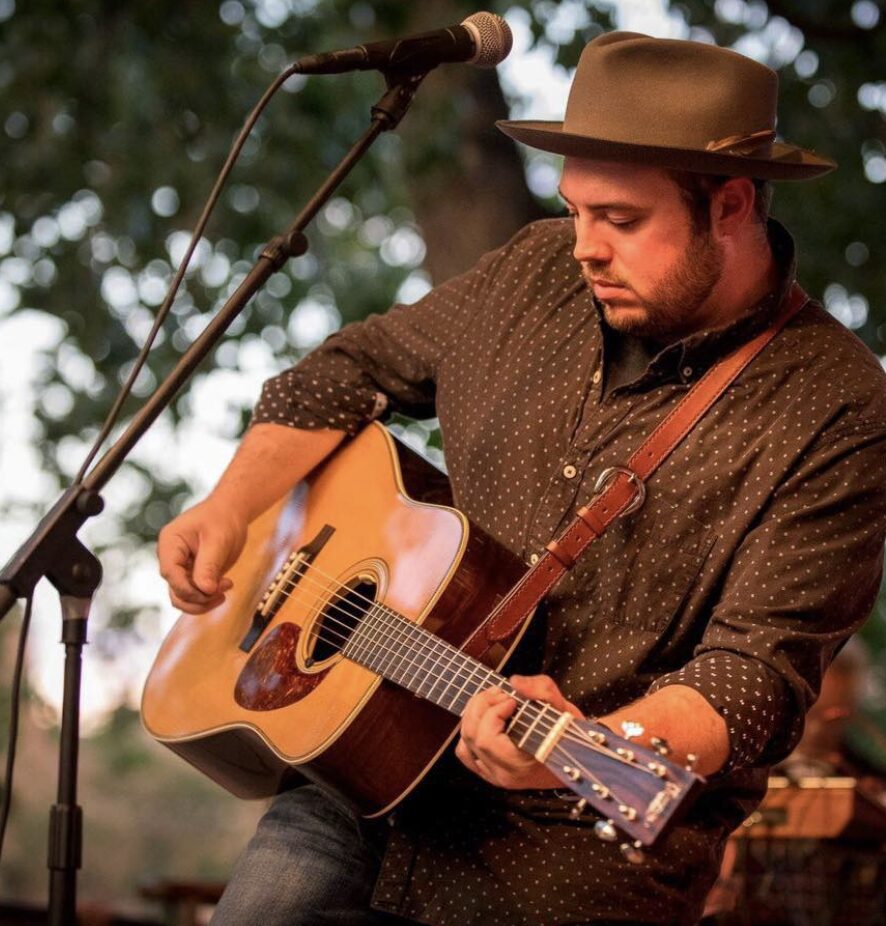
Trey Hensley – modern flatpicking powerhouse
Dan Miller – educator and historian of the flatpick tradition
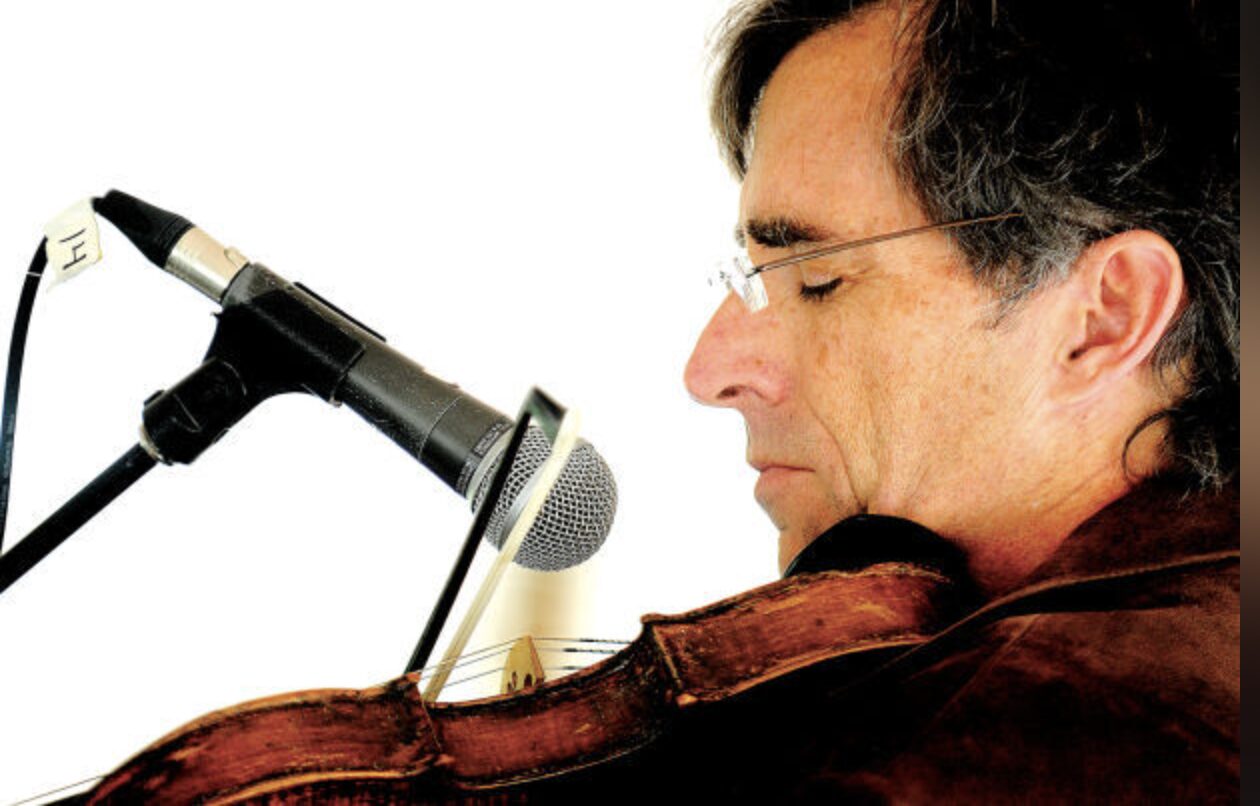
Robert Bowlin – former Blue Grass Boy with deep Monroe lineage
Together they’ll explore what bluegrass guitar really does inside a band:
🎵 The rhythmic drive that locks in with bass and mandolin 🎵 The art of bass runs and transitions between chords 🎵 Crosspicking, flatpicking, and melodic lead playing 🎵 Tone, timing, and the subtle craft of supporting a singer 🎵 How guitarists shape the groove in Monroe-style bluegrass
But the session doesn’t stop at talk.
🎻 Instrument Tasting with the Masters
Students will also take part in an “instrument tasting.” Participants can hand their own guitar to one of these masters and hear it played by some of the finest flatpickers alive. It’s a chance to discover the hidden voice of your instrument—and learn what tone, touch, and right-hand attack can really do.
Expect laughs, deep musical insights, and plenty of blazing flatpick runs. Because in bluegrass, the guitar isn’t just keeping time. Rhythm. Runs. Drive. Tone. Tradition. Welcome to the engine room of bluegrass.
Jim Richter is a multi-instrumentalist (mandolin, banjo, guitar) who over the last 40 years has focused on roots-based American music with a special focus on acoustic blues. Jim started his musical life as a bluegrass banjoist, followed by many years as an electric guitarist specializing in the styles of Freddy King and Hollywood Fats. However, the last two decades, blues mandolin has truly been the niche Jim was meant to embrace. Jim has become recognized as one of the leaders in blues mandolin and was recognized as such in Mandolin for Dummies. Also, Jim’s extensive knowledge of guitar-based classic blues rock has led him to transcribe and arrange many tunes formandolin that show how versatile the mandolin can be in reimagining rock tunes without “bluegrassifying” them.
Jim is most proud of the work he has done in mandolin education especially for adult learners. Partnering with Don Julin, Jim developed the Jim Richter Mandolin Camp for the Rest of Us. Jim’s curricula have included in-depth studies of blues mandolinists Papa Charlie McCoy and
Johnny Young, shuffles, blues-rhythms, pentatonic scales, blues improvisation, blues instrumental construction, linkage of blues to bluegrass, arranging blues rock tunes for mandolin, and other traditional mandolin pedagogy.
Jim’s discography includes his own In-Tuition series, The Road Home (tribute to Butch Baldassari), Tribute to Yank Rachell, Hootenanny with Gordon Bonham (live concert DVD), and Too Damn Cold by the Forecasters.
Bowlin was born and raised in Pocahontas, the same area of Northeastern Arkansas that produced country music giants Johnny Cash and Glen Campbell. He started playing piano and ukulele as a three-year old and turned to guitar when he was five. He won a statewide piano competition in Arkansas when he was 13. He was proficient on several instruments as a teenager and received widespread acclaim for his guitar ability.
In 1978, Bowling was runner-up in the National Guitar Flat Pick Competition, held annually at the Walnut Valley Festival in Kansas. The following year, he took home first place in the festival’s Finger Style Guitar Championship.
Bowling said he played music professionally all through high school and while attending the University of Arkansas in Fayetteville. After migrating to Texas and playing in his own band for several years, he joined the band of Irish folk singer Maura O’Connell. Starting in 1988, he had a long run as lead guitarist in the road band of country music star Kathy Mattea.
In 1993, took a job playing fiddle for Bill Monroe, the father of Bluegrass music, and was the last fiddler to join the Blue Grass Boys.. He was a member of Monroe’s Blue Grassgrass Boys until Monroe died in 1996. Robert plays on the recording of “Boston Boy” that closes the boxed set “Music of Bill Monroe, 1936-1994” Recording Sessions: 11/14/1993, 1/9/1994, 5/22/1994
With a stellar reputation in the inter-circle of the Nashville music community, Bowling was able to work recording sessions with true legends like Hank Thompson, the Osborne Brothers and Tom T. Hall. He played on the road with Country Music Hall of Fame members Faron Young, Bobby Bare and Ray Price. Bowlin is a founding member of The Time Jumpers, a band that still plays in downtown Nashville every Monday night.
Bowlin also has a thriving luthier business and repairs violins. He is an accomplished instructor, teaching at ETSU, and he has taught at workshops and camps across the US.
GRAMMY® Award-winning musician and singer/songwriter Trey Hensley—referred to as “Nashville’s hottest young player” by Acoustic Guitar magazine—was voted the 2023 and 2025 IBMA (International Bluegrass Music Association) Guitar Player of the Year. A multiple GRAMMY® nominee, Hensley received his first GRAMMY® Award at the 67th Annual Grammy Awards in L.A. on Feb. 2, 2025 as a member of The Taj Mahal Sextet, whose album Swingin’ Live At The Church In Tulsa won in the Best Traditional Blues Album category.
Widely noted for his world class musicianship and guitar prowess, Hensley was invited to perform alongside some of the world’s greatest guitarists at Eric Clapton’s Crossroads Guitar Festival 2023 in Los Angeles. That same year, Hensley was a featured player in a piece published by Guitar World magazine titled “6 Blazing Bluegrass Guitarists You Need To Hear.”
Hensley’s other-worldly guitar playing has attracted more than a third of a million followers on social media with rapid growth each day. Hensley has received praise from a truly eclectic group of guitar legends spanning multiple worlds of music who have become vocal fans of his, including legendary Deep Purple guitarist Ritchie Blackmore (who recently referred to Trey as “my favorite guitar player”); Tommy Emmanuel, CGP (who has called Trey “one of my favorite guitarists”); Steve Vai; Neal Schon; Vince Gill; Steve Wariner, CGP; Joe Bonamassa; John Petrucci; John 5; Tom Petty & The
Trey recently partnered with Taylor Guitars to create the Trey Hensley Gold Label 510e SE. But with Hensley it’s not just the guitar that does the talking—he’s also well known for his rich, powerful and soulful baritone vocals with echoes of Merle Haggard and George Jones. While that is true, Hensley’s voice is something all its own that cuts through and leaves a lasting impression (as Holler put it: “Hensley possesses a strikingly resonate, emotional voice, one that makes him a potent singer outside of his superb finger-picking ability.”)
Hensley’s musical DNA is made up of an impressive, eclectic melting pot of artists including The Allman Brothers Band, Merle Haggard, B.B. King, Stevie Ray Vaughan, Tom Petty, Jimi Hendrix, Tony Rice, Earl Scruggs, George Jones, Buck Owens, Wes Montgomery, Van Halen, Miles Davis, Jerry Garcia, Del McCoury, Jimmy Martin, Billy Joe Shaver, Ray Charles, The Band and many others.
Hensley was chosen to perform in December 2022 as part of special 2-night-only engagement with Nitty Gritty Dirt Band and special guests celebrating the 50 Anniversary of NGDB’s groundbreaking album, Will The Circle Be Unbroken, at the CMA Theatre at the Country Music Hall of Fame and Museum in Nashville.
Hensley is now embarking on a solo career, having enjoyed a successful string of four critically acclaimed recording projects and several years of highly-touted live performances with GRAMMY® Award winning resophonic guitarist Rob Ickes. Hensley can be seen nationwide on television: he had his own episode of the Emmy-nominated My Bluegrass Story (produced by the Bluegrass Music Hall of Fame) on RFD-TV; David Holt’s State of Music on PBS; Opry Live on Circle All Access; and has been a featured artist multiple times on PBS’ Woodsongs. The Opry holds a special place in Hensley’s heart, as he made his Grand Ole Opry debut at the age of 11, performing with Marty Stuart and Earl Scruggs (thanks to an invite from Stuart)—quite a way to be catapulted into the spotlight.
Jack Lawrence has been called a “flatpicking powerhouse.” His recordings and performances combine exciting, high spirited and innovative guitar solos with tasteful phrasing in his own inventive style. Well known as Doc Watson’s partner since the early 1980’s, Jack’s inspired playing and smooth vocals provide listeners with performances that span musical traditions. Jack grew up in Charlotte, NC and his professional experiences provided a wealth of opportunity and associations that continue to fuel his talents today. In the 1970’s, Jack was part of The New Deal String Band and Bluegrass Alliance. In 1978, he teamed with Joe Smothers in a relaxed folk duo. Smothers and Lawrence successfully toured and recorded throughout the country in the 1970’s and 80’s. Through Joe, Jack met Doc and Merle Watson and he began to tour with Doc in 1983 as Merle pursued other interests. Jack played side-by-side with Doc for over 25 years and the opportunity to partner with one of his most important musical influences was infinitely rewarding. The two musicians developed a brilliant guitar partnership, capitalizing on both their strengths. Jack’s talents are featured on many of Doc’s recordings, including the Grammy winner “On Praying Ground.” The solo project “About Time,” released in 1997, showcases Jack’s amazing guitar style and rich, warm vocals. In 2001, he assembled some of the friends he most admires for an exciting recording project. These sessions resulted in the April 2002 release of “I Don’t Need The Whiskey Anymore” featuring Sam Bush, Jerry Douglas, Tony Williamson, The Del McCoury Band and, of course, his old friend and partner, Doc Watson. Jack’s most recent project, “Arthel’s Guitar,” was released in 2013 and features tunes memorializing the first generation of Bluegrass, Country and Folk musicians that inspired him to play music.
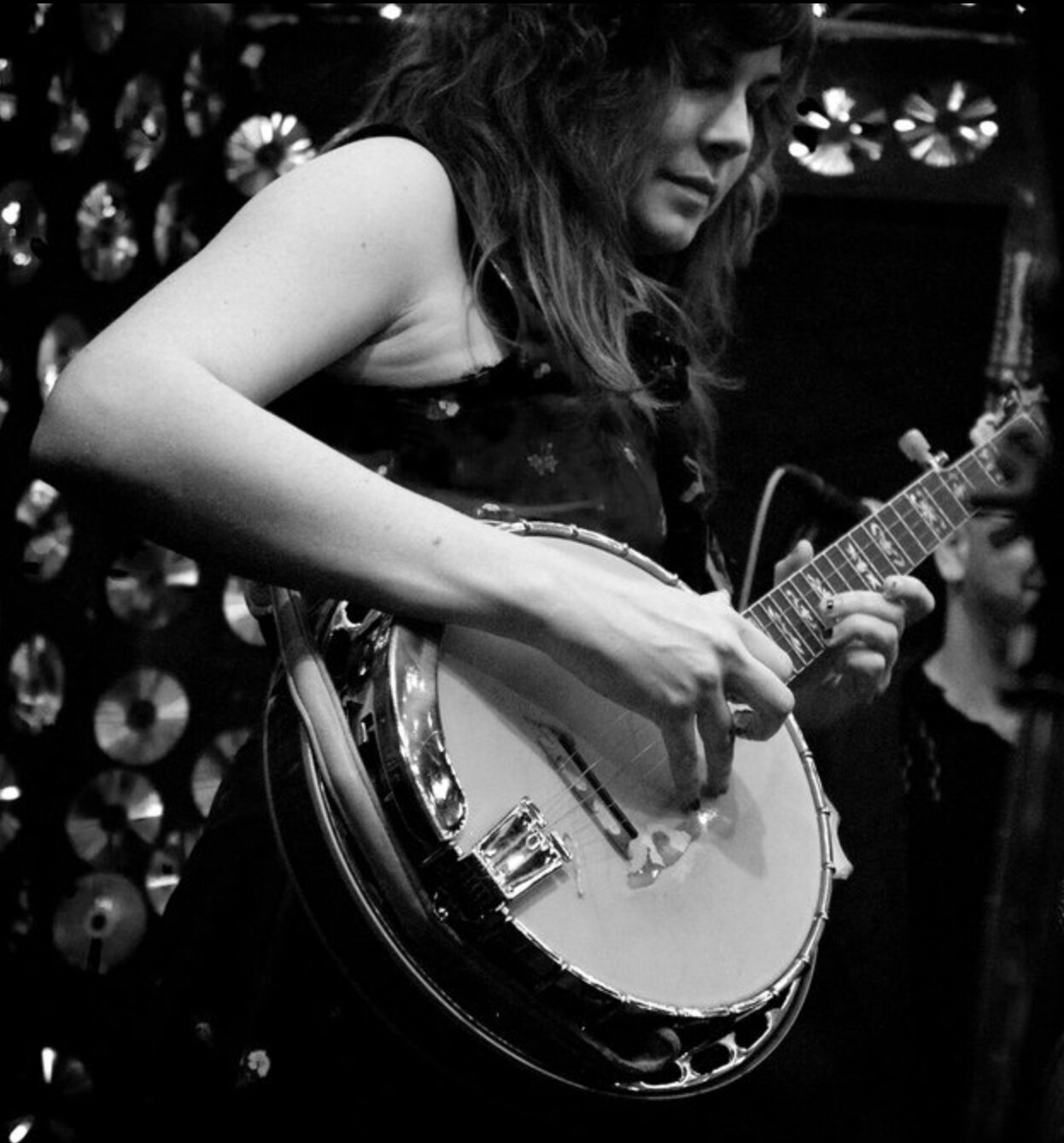
Grace Van’t Hof is a founding member of the Grammy-nominated group Della Mae, as well as a founding member of the popular vintage roots music band Bill & The Belles. A native of Holland, Michigan, Grace’s driving banjo style is influenced by early masters Earl Scruggs and Don Reno, as well as more recent players like Ron Block and Jim Mills. As a self-described “songwriting geek,” Grace focuses instrumentally on what best supports the song. Well-versed in old-time and early country music, Grace incorporates their ukulele playing into the Night Drivers’ repertoire. Grace also loves harmony singing, and blends naturally with Chris’ and Mark’s voices. Grace is also an award-winning graphic designer, winning the IBMA Graphic designer of the year for four straight years and counting. Grace makes their home in Detroit, MI.
Reed Stutz is a multi-instrumentalist and singer who makes his home in Ringgold, Georgia. He draws heavily on traditional bluegrass from the 1940s and 50s, as well as old time fiddle music, with a particular knack for the mandolin style of Bill Monroe and those who followed in his footsteps. He plays mandolin, guitar, banjo, and fiddle and performs with numerous groups across the genres, blending a traditional approach with his personal style.
He is often found performing or teaching at festivals, camps, and fiddler’s conventions around the country, and regularly teaches private lessons. Some of the musicians he has worked with in recent years include Alice Gerrard, Tatiana Hargreaves, the Nokosee Fields Trio, Bronwyn Keith-Hynes, Molsky’s Mountain Drifters (Bruce Molsky, Allison de Groot), Jason Carter, Joseph Decosimo, and David Peterson & 1946. Reed brings instrumental fluency and a unique voice to string band music, artfully complementing whatever music he is a part of.
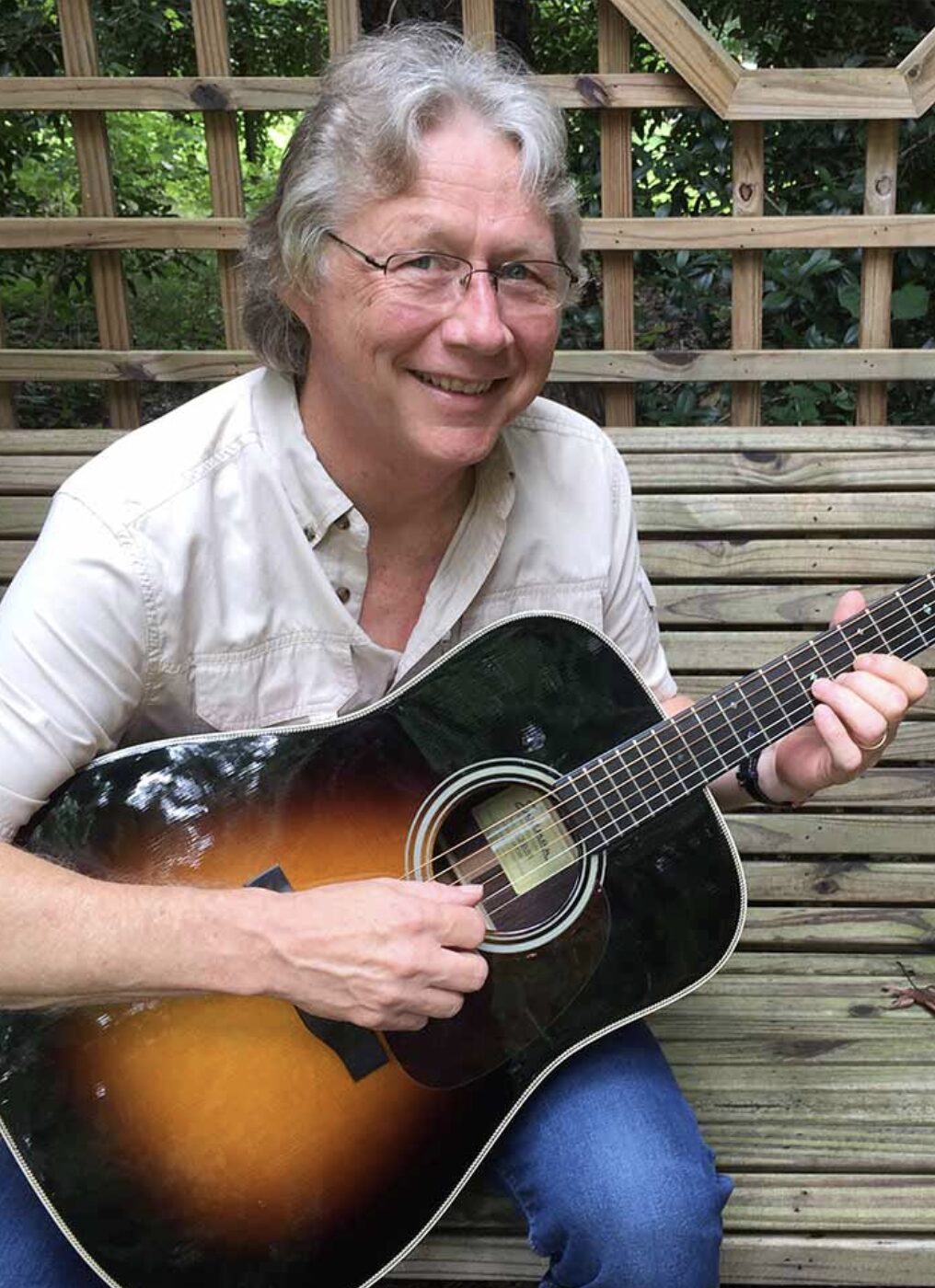
Dan Miller was the publisher and editor of Flatpicking Guitar Magazine from 1996 through 2016. He has also
authored or co-authored seventeen instructional books for guitar and one for mandolin as well as produced
three instructional videos for flatpicking guitar players. Since 2020 he has been the managing editor of
Bluegrass Unlimited Magazine, hosts a weekly podcast for Bluegrass Unlimited and produces instructional
content each week for the Bluegrass Unlimited Magazine YouTube channel.
Starting in 2002, Dan played bass on tour with guitar master Brad Davis. In 2005, they formed a trio with
Tim May on banjo and Dobro and toured for ten years. In 2010 Davis, Miller and May released their CD
"Doves, Crows, and Buzzards" and in 2012 Dan Miller released his solo CD "Going Through A Phase."
Additionally, Dan Miller and Tim May traveled the country for many years teaching guitar and mandolin
workshops at music stores and music festivals. They have taught literally hundreds of such workshop
events. Dan has also taught guitar five times at Camp Bluegrass in Levelland, Texas, three times at the Grand
Targhee Music Camp in Wyoming, and twice at the Bluegrass Unlimited Workshop Weekend in Owensboro,
Kentucky.
Currently Dan lives in Columbia, Missouri, and owns a farm in Harrisburg, Missouri, where he conducts
monthly weekend music workshops for guitar, mandolin and banjo with his friends Tim May and Brad Davis.
He also teaches private lessons for guitar, mandolin, banjo, Dobro, and bass and performs in several regional
bands.
 Flatpicking Firepower: More Than Rhythm: The Hidden Power of Bluegrass Guitar
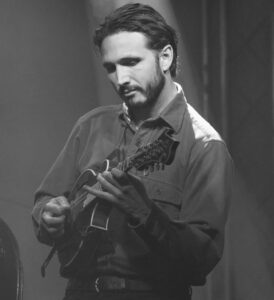 Reed Stutz is a multi-instrumentalist and singer who makes his home in Ringgold, Georgia. He draws heavily on traditional bluegrass from the 1940s and 50s, as well as old time fiddle music, with a particular knack for the mandolin style of Bill Monroe and those who followed in his footsteps. He plays mandolin, guitar, banjo, and fiddle and performs with numerous groups across the genres, blending a traditional approach with his personal style.